Autorin: Eva Westhoff
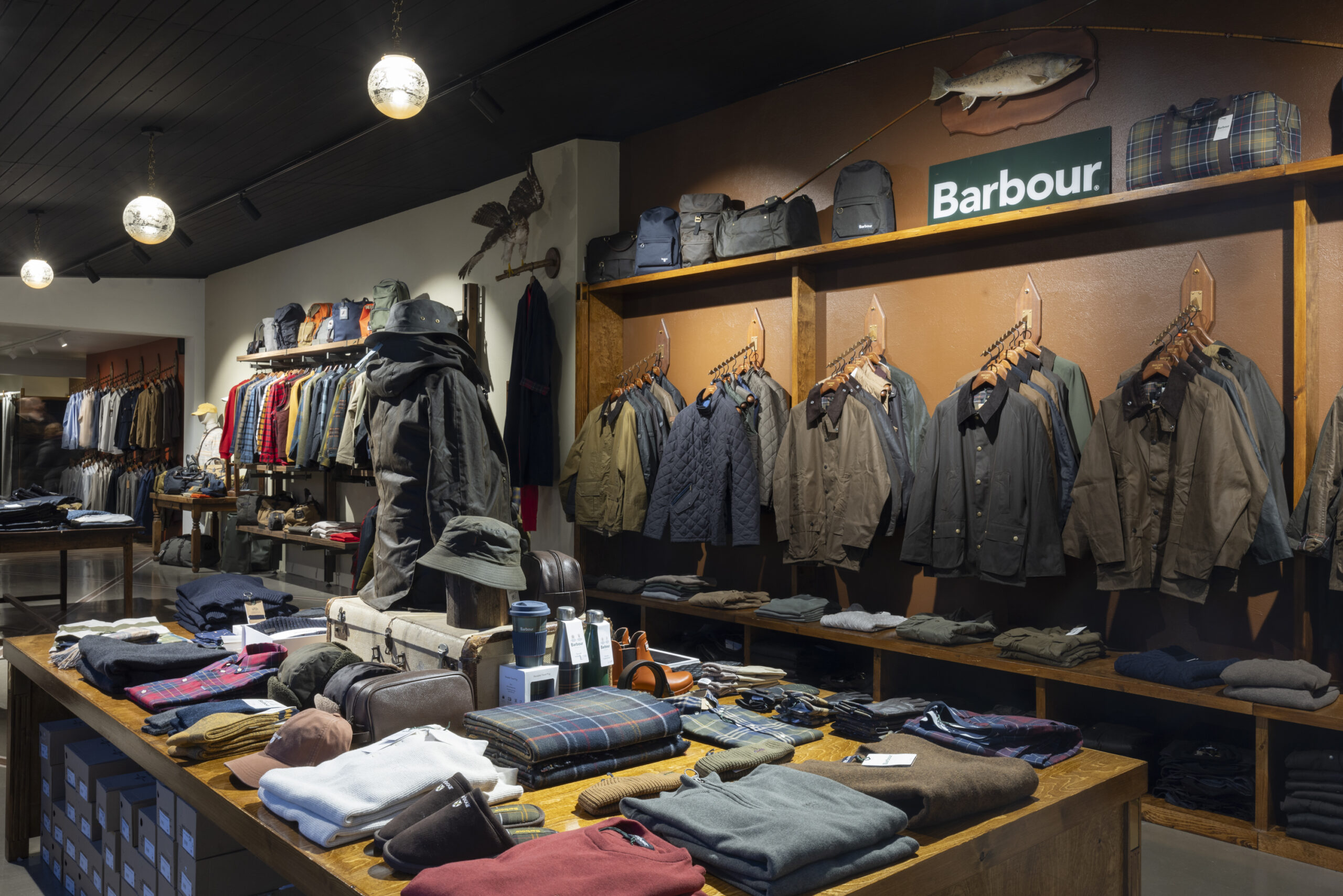
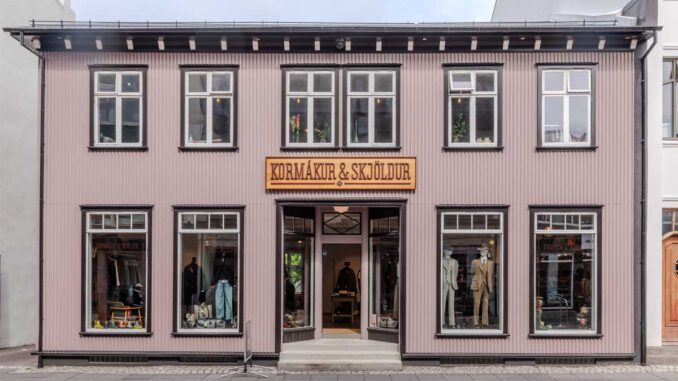
Everything started with a second-hand store. This year, Kormákur og Skjöldur celebrates its 30th anniversary. From the very beginning, the Icelandic company has been run by the duo Kormákur Geirharðsson and Skjöldur Sigurjónsson. British sartorial traditions with an emphasis on high-quality woollen fabrics and clothing for outdoor pursuits and leisure in northern climes play a central role for the menswear specialists – not only in their 400-square-metre flagship store in Reykjavík.


The company also operates two smaller countryside stores, shop-in-shop locations at two additional sites, and an online shop, and currently employs around 30 people. Women’s clothing was added to the range in 2017. Since 2020, Kormákur og Skjöldur has also offered its own brand, ‘K&S Icelandic Tweed’ – a collection featuring a specially produced tweed fabric woven entirely from Icelandic wool. We spoke about international heritage brands, the challenges in a small market such as Iceland, and the question of whether something like a typical Icelandic fashion exists.
FASHION TODAY: Who is your target group and how do you, as a fashion retailer, appeal to this target group?
Kormákur Geirharðsson and Skjöldur Sigurjónsson: “Our customers are men and women of all ages, with a core customer being men aged 25 to 55. We’re constantly expanding both younger and older. We reach them via social media, radio, and strong word of mouth, where our reputation helps a lot.”
Your brand portfolio ranges from Barbour. to Merz b. Schwanen to PIKE BROTHERS. How strongly is the Icelandic fashion market influenced by global brands, and what role do local brands play?
“Icelanders are very globally-minded people and have a vast knowledge of what is going on in fashion worldwide, this allows us to mix brands in a way that is not maybe typically seen elsewhere. In the past we often couldn’t find what we were looking for to complete the brands we had, so we began our own collection, focused on traditional menswear tailoring with the core being mixing of colours and patterns. Traditions, both American and European heavily influence our designs and international heritage brands play a huge role in our store, our own label K&S and other local designers are among our best sellers. With our own Icelandic tweed, which we developed with Icelandic sheep farmers and wool mill, being our most popular products.”
Is there such a thing as a typical Icelandic design?
“Icelandic style is functional and seasonally tuned toward warmth; muted tones: black, brown, natural – layered looks and durable materials like wool, tweed, and robust outerwear. The weather is variable, sun, rain, storm, snow, so clothing must be practical and long-lasting. If anything, our dominant season is an extended autumn.”
Since 2020, you’ve offered an ‘Icelandic Tweed’ collection. What is it all about? Do Icelandic traditions flow into the collection?
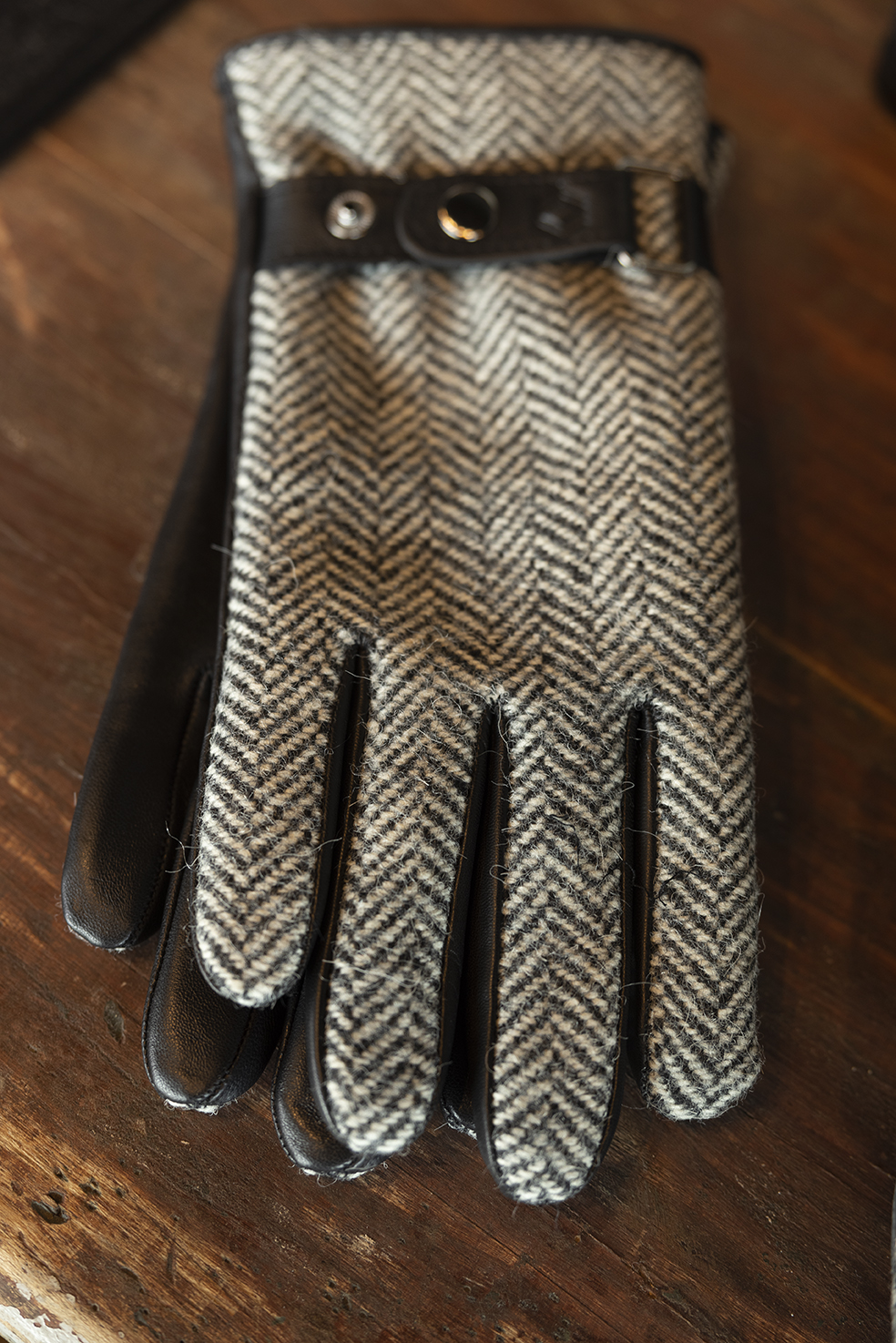
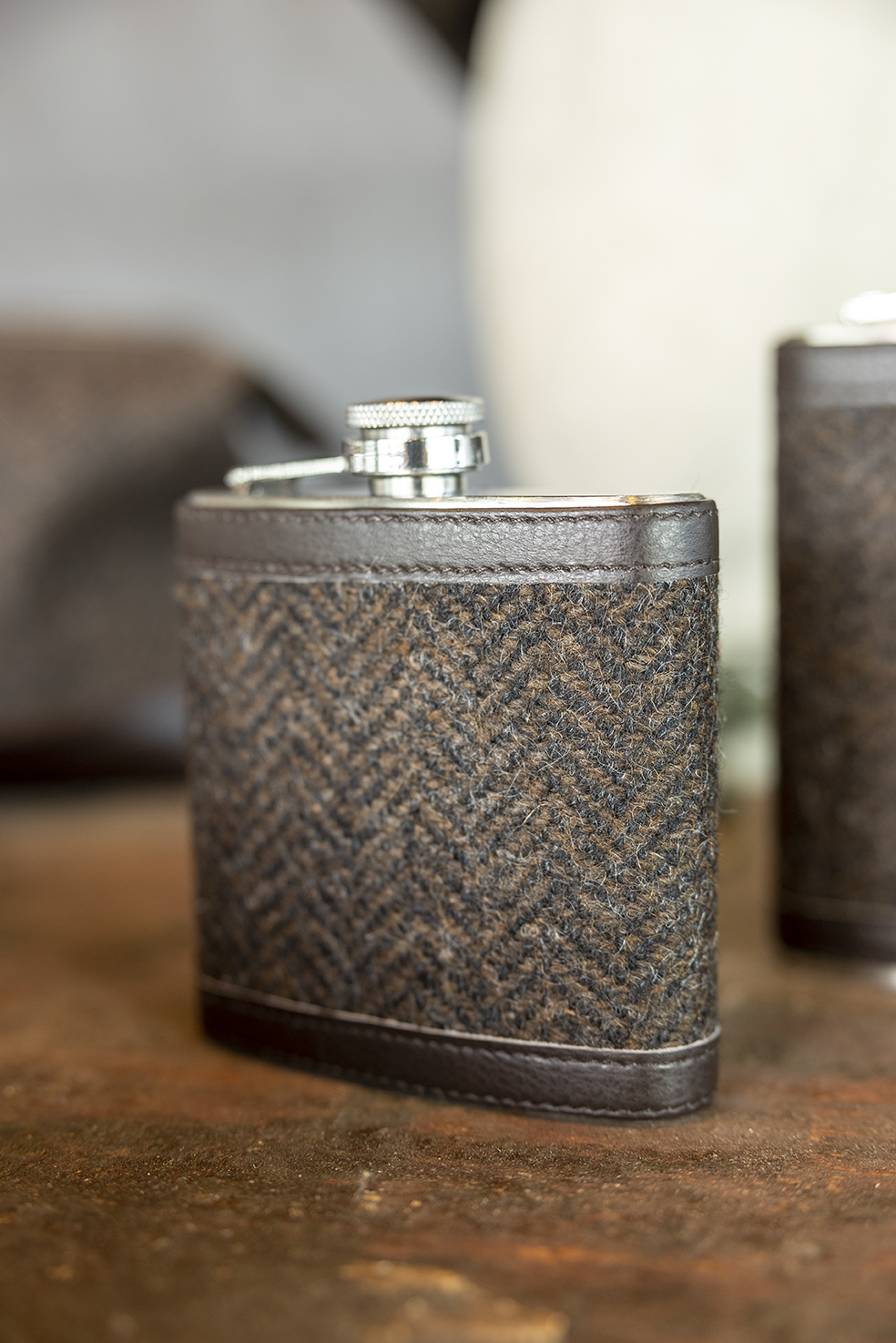
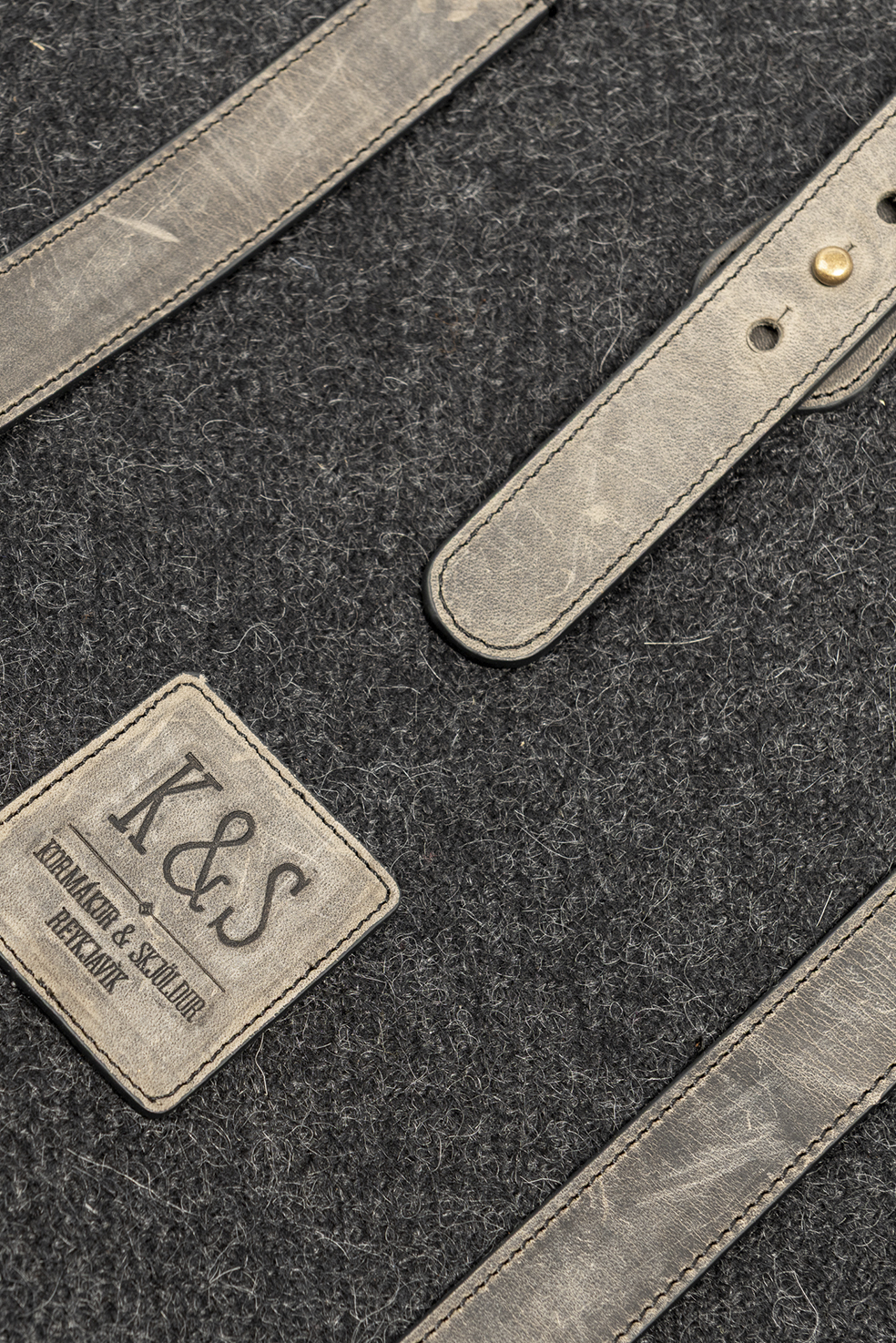
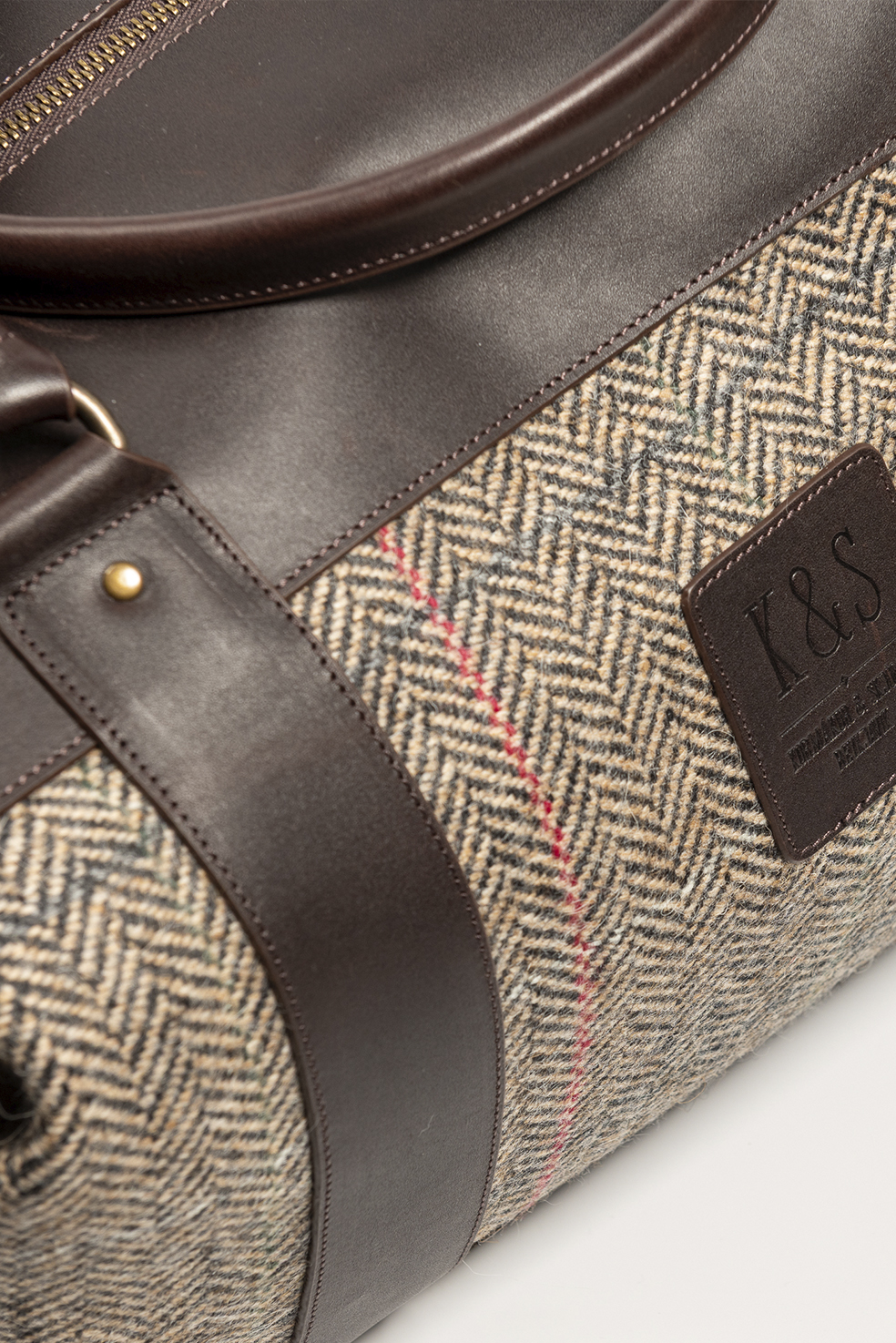
“We sold Harris Tweed for years and asked: why not make our own? Tweed production had vanished here for decades, so rebuilding it was a long process and a point of pride. We send the yarn to a factory in Austria, who produces the tweed material for us, then we manufacture garments mainly in Turkey, Scotland, and Spain. Tweed has historical roots in Icelandic clothing, so tradition certainly informs the line, which includes suits, coats, and accessories alongside tweed pieces.”
Do you also sell the Icelandic Tweed collection through other retailers?
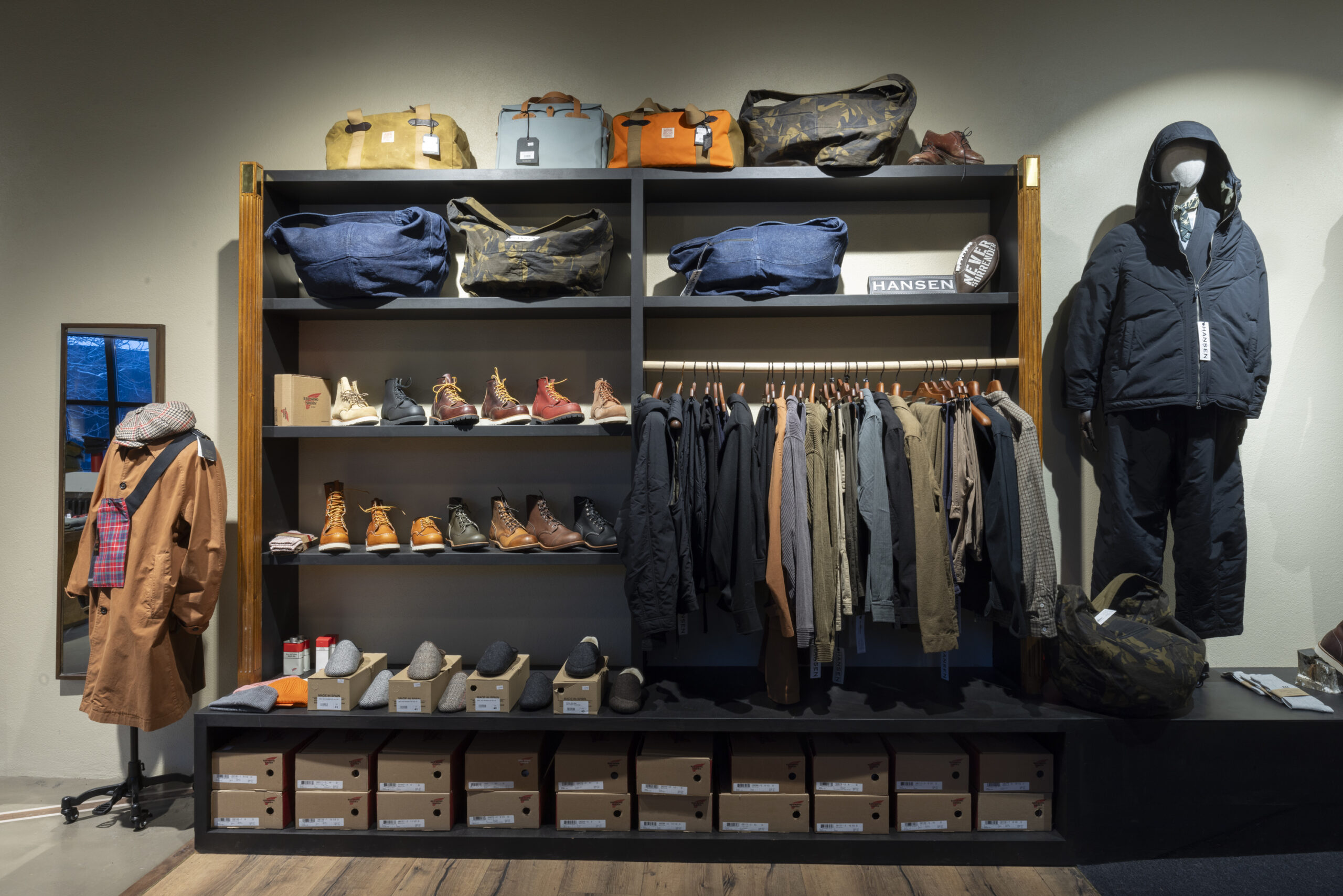
“Yes, we sell the tweed line to other Icelandic stores and have collaborations abroad, for example with WALKER SLATER in Scotland and HANSEN in Denmark for our 30th anniversary. We’re growing cautiously and deliberately.”
To what extent does Iceland’s climate influence your product range? Do you sell seasonal items?
“We design for year-round durability. Given our single dominant season, garments must be warm and long-lasting. Tweed and wool breathe, resist rain, and retain heat – qualities ideal for Iceland. The unique properties of Icelandic wool also play a role in performance and comfort.”

In Germany, too, many city dwellers wear clothing with high performance attributes. What role do functional materials, layering concepts, and the urban outdoor theme play in Iceland?
“They’re important. Our customers expect performance and practicality, so we emphasise natural materials and avoid unnecessary synthetic fabrics. Layering concepts and multifunctional garments are central to our design and curation.”
What role does sustainability play in Icelandic fashion?
“It’s increasingly important. We focus on durable materials and long-lived garments. Seeing our clothes resurface in second-hand stores shows they last, which we view as a mark of sustainability. We also try to reuse as much as we can. For example, we have developed a line that specifically focuses on this, where we take garments from older collections and transform them into new, unique pieces.”
You also sell suits. On what occasions do men in Iceland wear suits? Do you see a return to a more formal wardrobe?
“Suits remain for traditional occasions such as weddings, birthdays, Christmas – but men also wear suits more casually. People mix jackets with jeans, vests with plain trousers; younger men especially experiment using for instance bandanas instead of ties, untucked shirts, mismatched fabrics. It’s less a return to strict formality and more personal expression.”
Do you offer special services?
“Yes. We host private after-hours events for small groups or workplaces, provide Barbour. waxing, alterations on clothing, almost like made-to-measure tailoring. We have also offered made-to-measure tweed jackets. If we can do something for our customers, we will try our best.”
What percentage of your sales do you generate through your online shop?
“Around 15 per cent today and growing. International online sales are increasing each year.”
Do you attend trade fairs? If so, which ones? Where do you find out about new collections?
“Yes – fairs are vital. We regularly attend CIFF in Denmark and Pitti Uomo, among others. Fairs let us meet brands, inspect fabrics, and connect with people behind the labels. We also discover new lines through travel, visiting stores, and tips from friends and customers.”
Where do you order products? What challenges does Iceland’s geographical location pose for procurement and purchasing?
“We place orders after careful review of collections, often after fairs. Our Iceland location makes logistics and costs challenging, flights and freight are expensive, and we must choose between slower, cheaper sea freight and faster, pricier air freight. Being a small market – about 400,000 people – limits order quantities and creates thresholds with some suppliers.”
Looking ahead to the future of Icelandic fashion retail, do you anticipate any structural changes? Where do you see potential for innovation?
“We hope to see more local manufacturing re-emerge. Much knowledge was lost, but new designers focused on environmental impact could revive local production. Innovation can also come from reusing leftover fabric, weaving scraps into new textiles and broader recycling and reuse of unsold materials.”
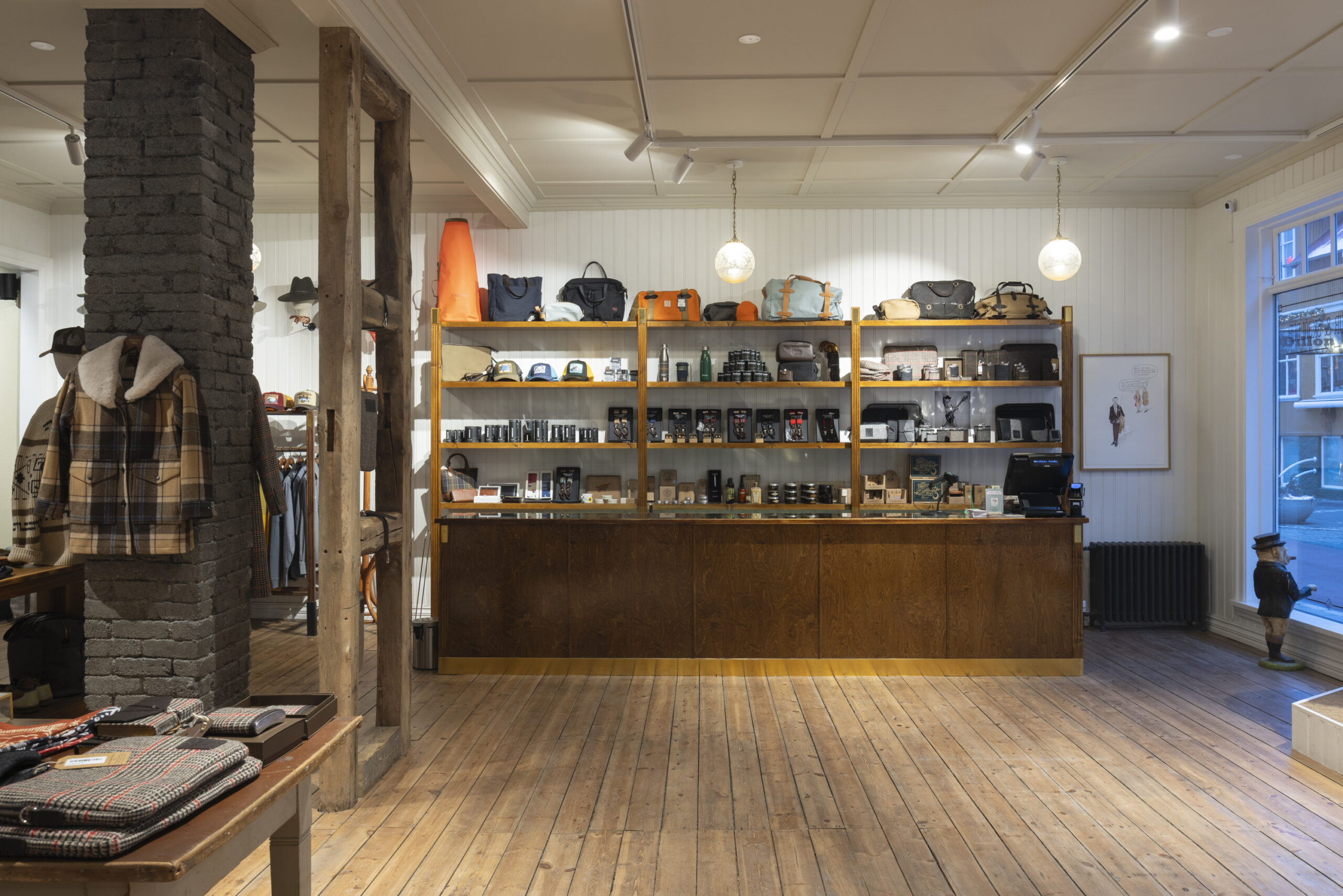
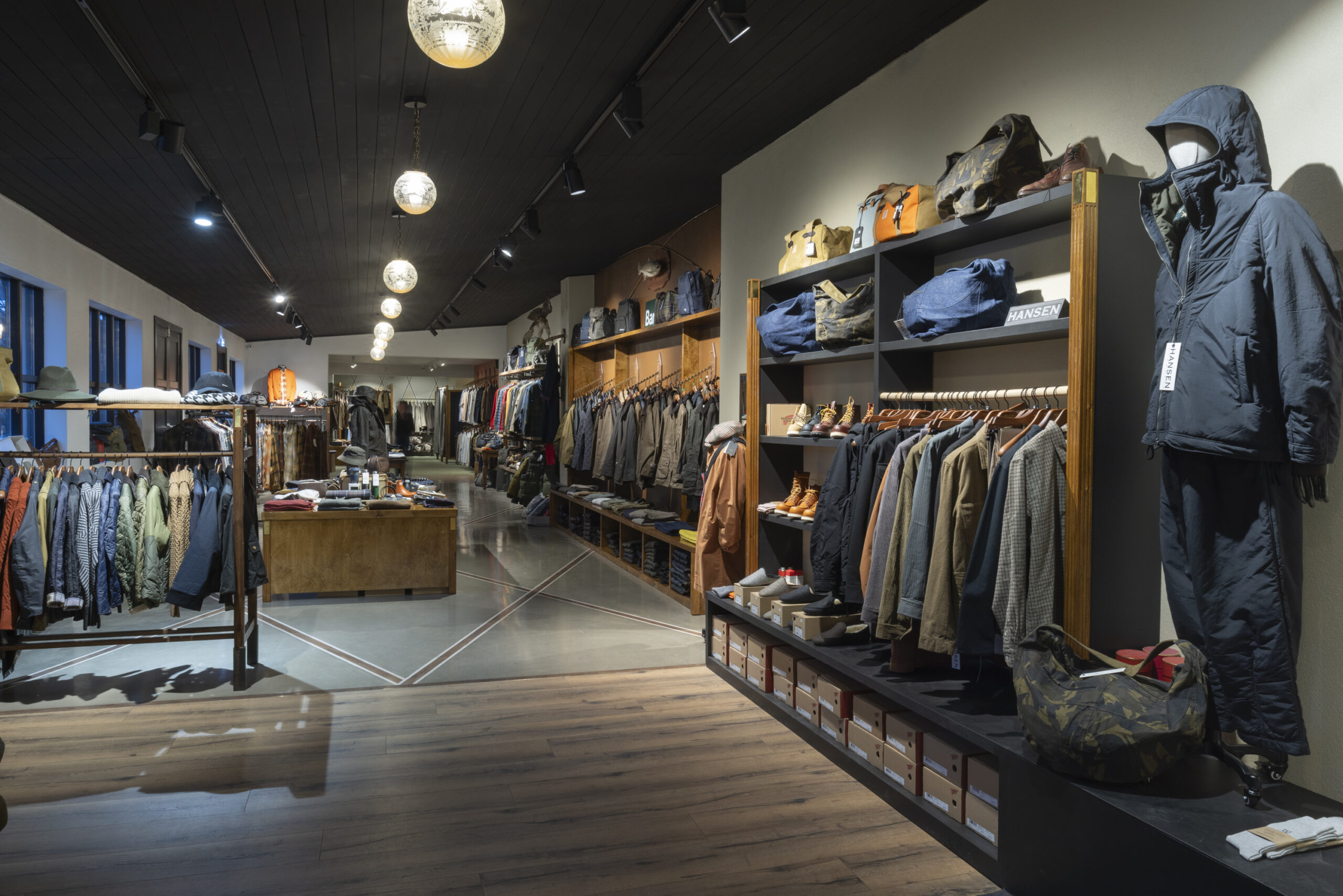
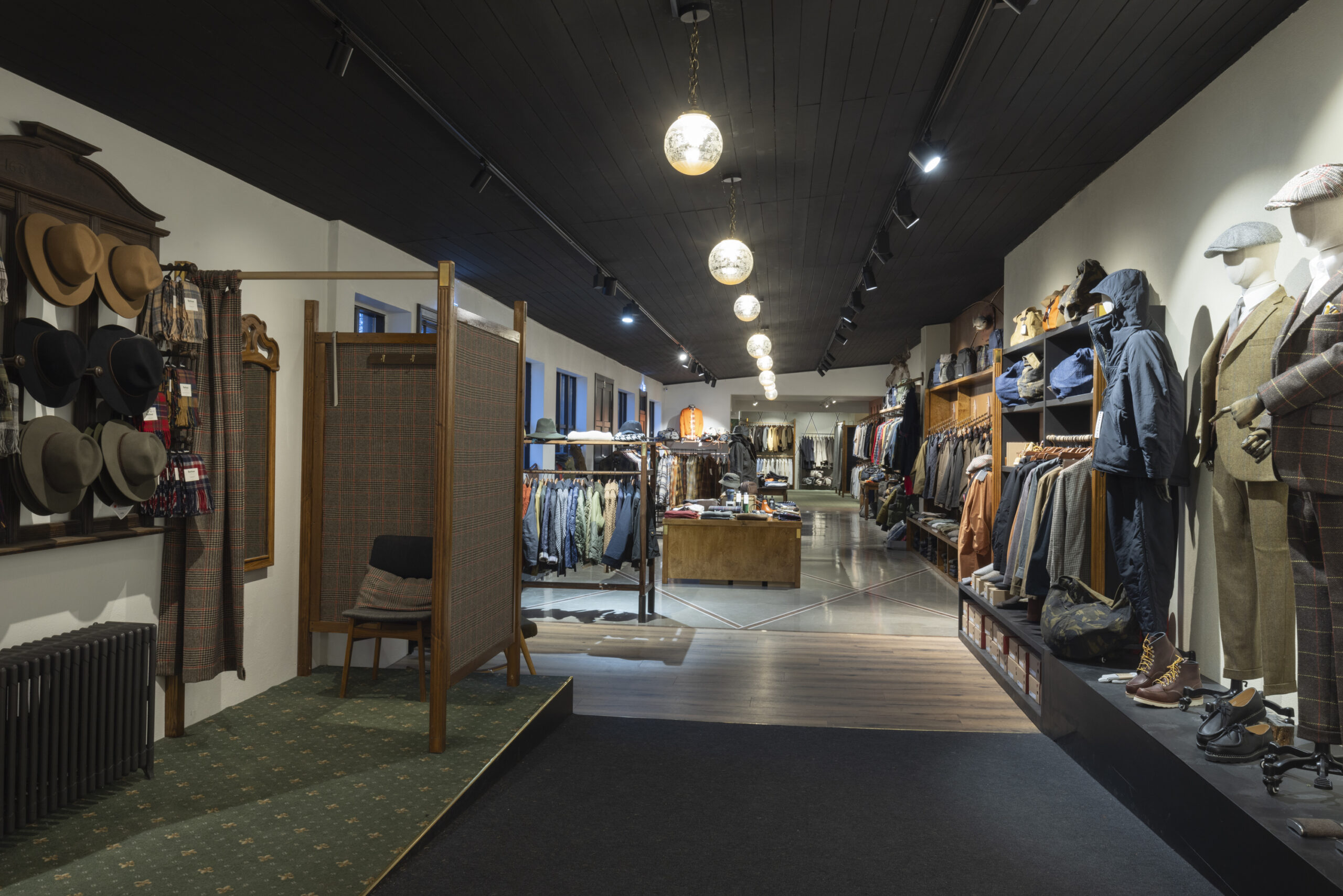
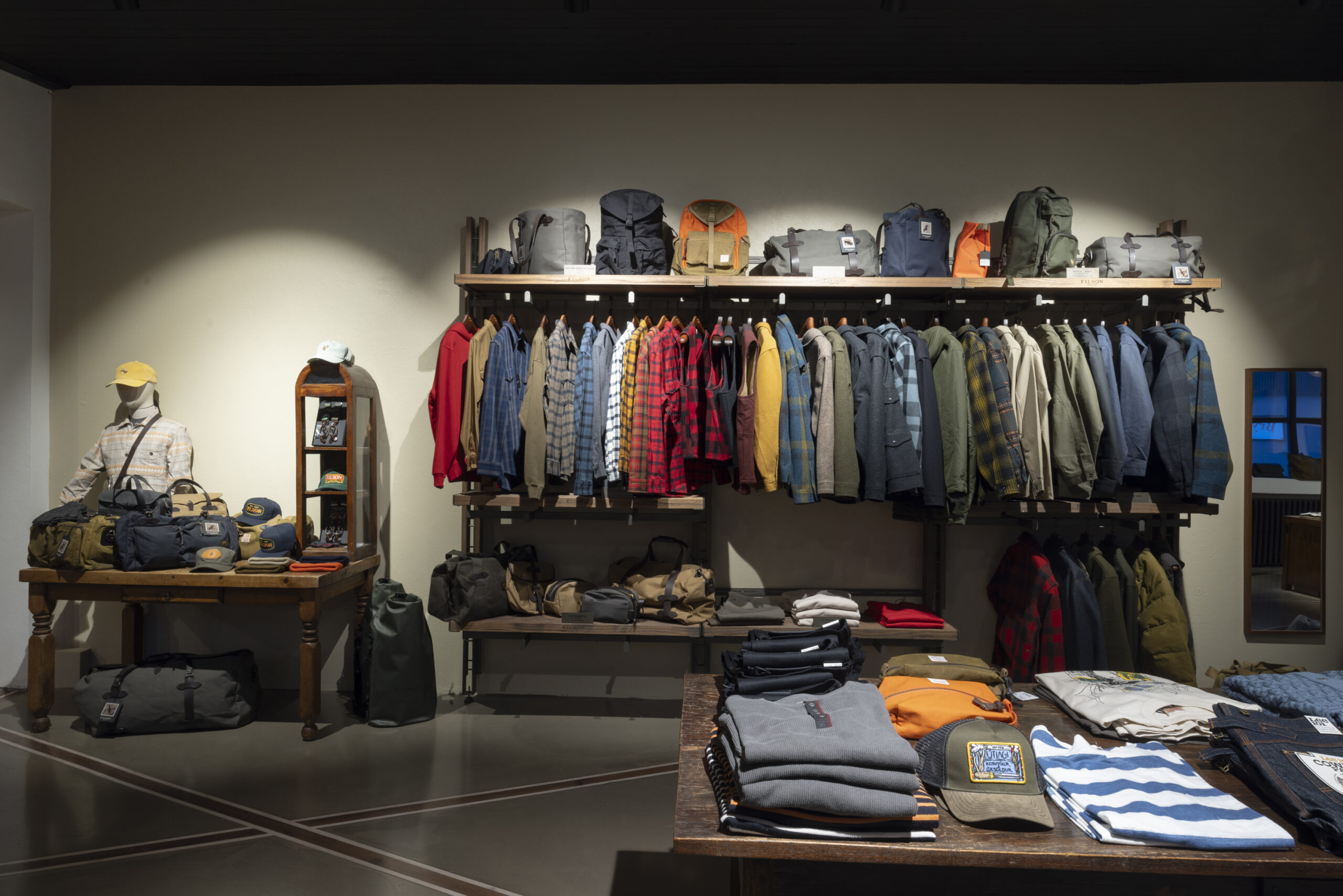
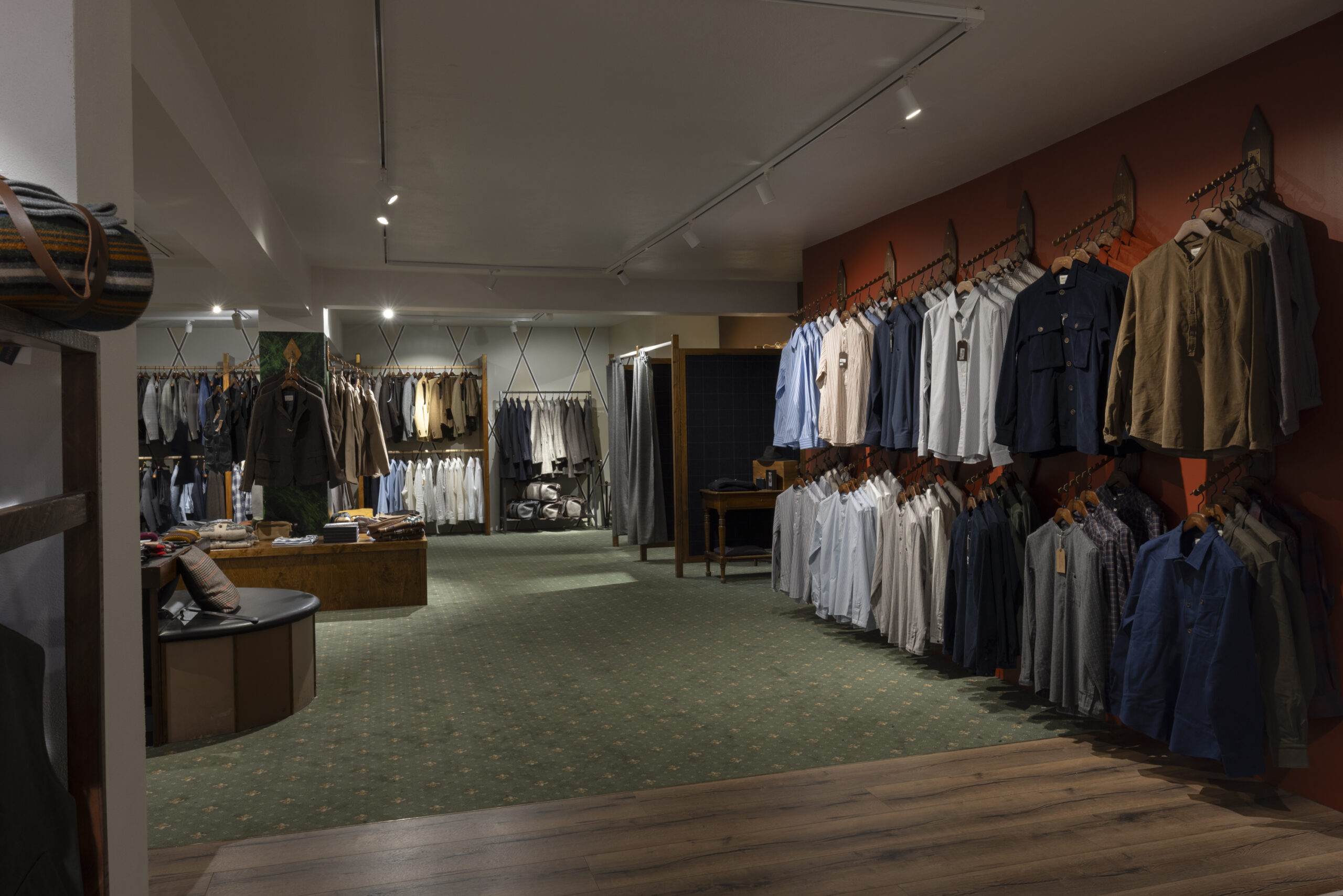
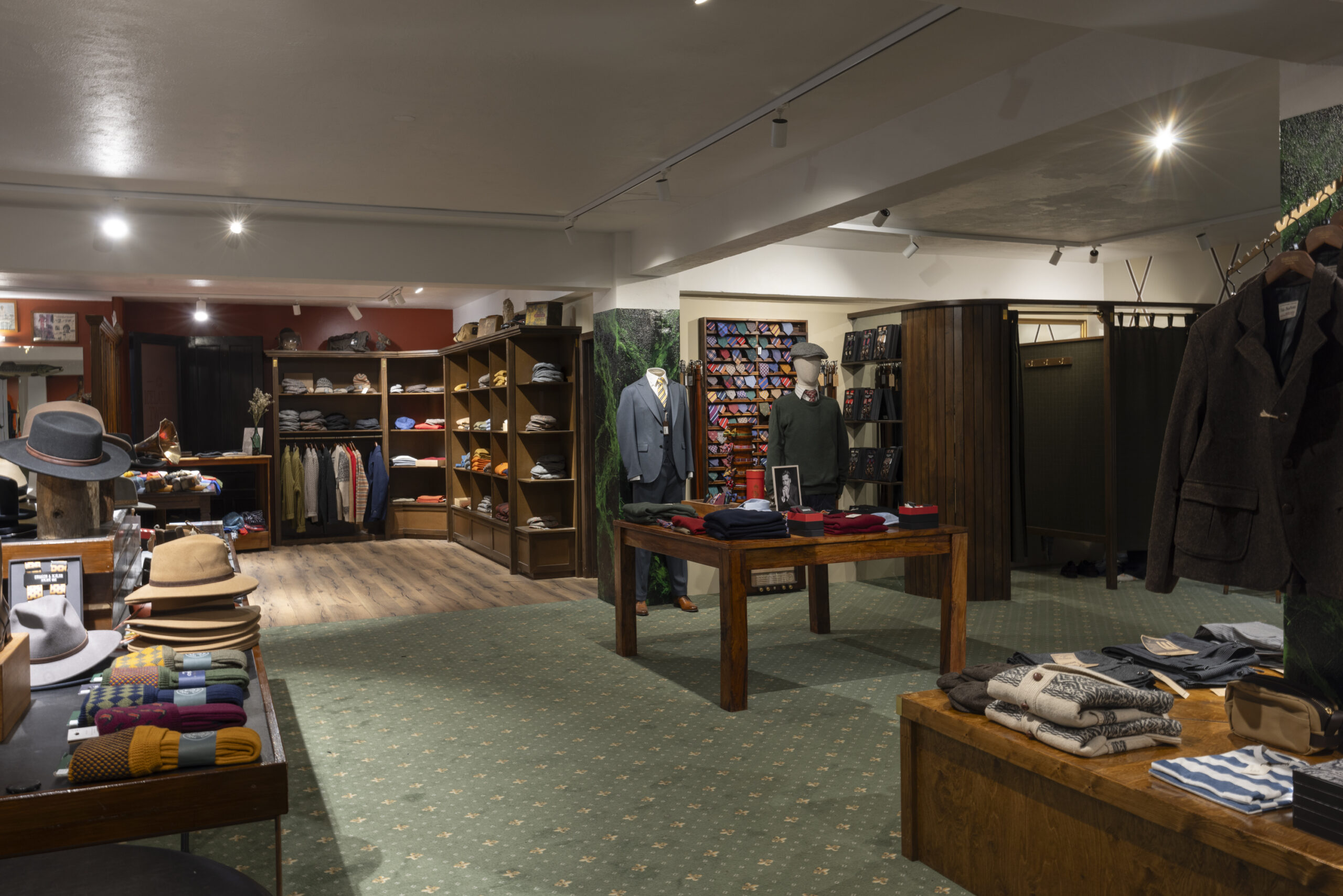
 The Kormákur og Skjöldur flagship store is located on Laugavegur, Reykjavík’s main shopping street. Photo: ©Baldur Kristjáns